Sometimes, but only once the rest of your marketing is ready.
Paid ads can work brilliantly for a small NZ business, but they’re not always necessary. If you have little competition or your organic marketing is already bringing in enough of the right customers, you may not need them at all. But if you have the budget, they earn their place when you need more reach, faster: a launch, a quiet season, a new location or a new service.
Even then, they only work when there’s a clear strategy behind them and somewhere worth landing. Otherwise, you’re paying to send people to a page that doesn’t back up what the ad promised. And they leave. That’s not money well spent.
Marketing and advertising aren’t the same thing
Not surprisingly, I get asked about paid ads a lot, usually by business owners who assume they’re the fix for getting more customers — when the real problem lies elsewhere.
In those conversations, I’ve noticed people use marketing and advertising as if they mean the same thing. They don’t. Marketing is knowing what to say, who to say it to, and where. Advertising is paying for a space to say it.
So, when a business owner tells me marketing hasn’t worked for them, nine times out of ten what they’ve actually tried is random social media or advertising tactics: posting when they remember to, a few boosted posts, or a Google Ads campaign that sends people to a website that isn’t ready for them.
Organic reach has shifted
That said, I understand why the question keeps coming up.
Organic reach isn’t what it used to be. With so many businesses using socials to sell, sell, sell, and AI-generated images flooding our feeds, customers are being turned off.
Meta’s own AI now fills people’s feeds with content from accounts they don’t follow. So every post you put out has to work that much harder to stop the scroll.
Then there are the constant algorithm changes. Facebook shows a post to a small test audience first, and only pushes it further if they engage. That’s why forcing random people to follow your page via giveaways works against you in the long run.
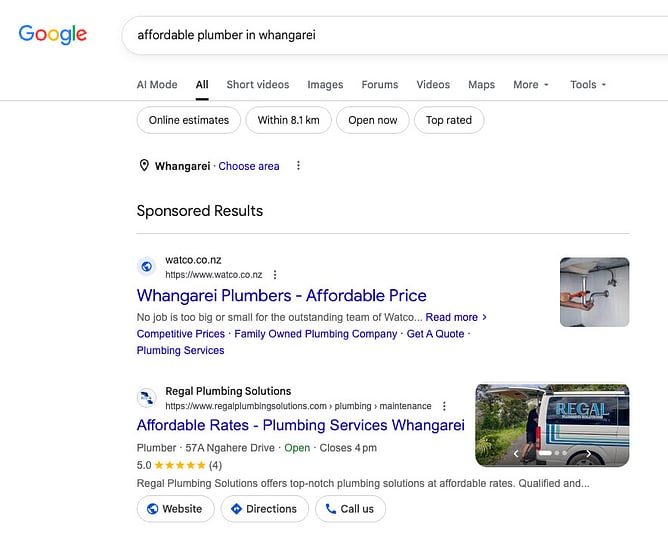
And good old Google? Sponsored results and AI-generated answers now sit above the organic listings for many searches, pushing them further down the page. No wonder so many business owners worry their competitors with deeper pockets are getting seen first.
That’s the blunt reality. But “should I run ads?” isn’t a yes/no question. It’s a readiness question. And a strategy question.
What a paid Google search ads specialist sees
I spent years working in advertising, so I know how paid ads work and when they’re worth it. These days, I focus on strategy and creative direction and leave hands-on management to specialists.
But it’s a valid marketing consideration, so I asked someone who manages campaigns every day: Dave Smyth from Energise Web Design. Here’s what he said, and what it means for your business.
Google or Meta? They’re not interchangeable
Google search ads respond to intent: someone is actively searching for what you sell, right now. Meta ads target a demographic: they interrupt someone’s scroll and try to spark interest they didn’t know they had.
If your business sells something people search for when they need it (a plumber, a lawyer, a builder), Google is where the higher buyer intent lives. If you sell something visual and emotional, like interior design, food or fashion, Meta’s image-led format is worth considering. That doesn’t rule Meta out for everyone else, though.
Dave’s view is that for many businesses, the approach is what makes it work. Same budget, completely different job.
Budget first, landing pages a close second
I asked Dave what tells him a business isn’t ready for Google Ads yet.
“Mainly budget!” he says. “But also a lack of good landing pages.”
Budget is the obvious one. Landing pages are the one business owners tend to miss. You can have the best ad creative in the country and still waste every dollar if the page it lands on doesn’t do its job.
A service page that lists ten different services with no clear call to action? That’s ad spend going straight into a black hole. Paid traffic shouldn’t land on your homepage; it should land on one page that does one job. If that page isn’t relevant to the ad and doesn’t make the next step clear, you’ve paid for the click and got nothing back.
What a realistic budget actually buys
There’s no magic minimum, but your budget is really set by what a click costs in your industry. Too few clicks and there’s no data for Google, or your ads manager, to learn from. Dave suggests around $20 a day as a baseline starting point.
What you get for it in enquiries varies hugely by how competitive your niche is. Google Search Ads works like an auction: the more businesses bidding on the same searches, the more each click costs.
How long it takes to know if a campaign’s working depends on the niche, and sometimes it takes a while to figure out what works and what doesn't. It can also help if whoever’s running it has experience with businesses like yours. They’ll be able to select the best keywords.
📌 Worth knowing: The $20 budget suggestion works for most service-based businesses, but it depends on click cost, competition, and location. Auckland can be more expensive and competitive; it’s usually cheaper in the regions.
The biggest DIY mistake with Google Search Ads
Google makes it quick and easy to set up a campaign yourself. The biggest mistake Dave sees is business owners thinking the “give us your credit card and press go” approach will get results fast.
But there’s a catch. If you set it up yourself, Google steers you towards its automated campaign options and “broad match” keywords. That means Google guesses what people mean when they search. You end up paying for a flood of irrelevant clicks, and your budget’s gone before a qualified lead ever finds you.
The second mistake? Thinking you can turn it on and forget it. Campaigns need regular checking and adjusting, especially now Google makes so many of the decisions for you.
These automated recommendations tend to push you towards more clicks and spend. If you’re not sure what a recommendation will do, don’t accept it, and switch off auto-apply. Knowing which ones are worth saying yes to is exactly what a good Google Search Ads specialist is for.
Before you spend a dollar on ads
Everything Dave says points the same way: ads amplify what’s already there. If the online foundations are shaky, paid traffic just won't convert.
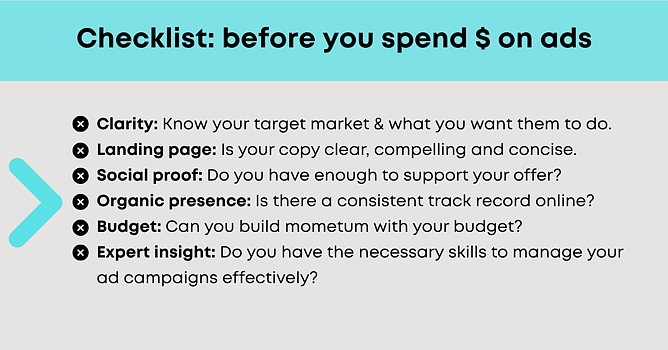
Before I’d suggest anyone runs ads, Google search or otherwise — these are the questions I’d want answered:
Do you know exactly who you’re trying to reach, and what you want them to do?
Does the page you’d send them to deliver on the ad and make the next step obvious?
What will they find when they check you out? Plenty of people click an ad, then look up your Google reviews and socials before they make contact.
Is your organic presence in good shape?
Can you afford to run them long enough to learn something, with someone keeping an eye on them?
If you can’t say yes to most of these, start there. Every ad dollar will work harder later, and you may find you need fewer of them.
🔑 Summary: Your Key Takeaway
Paid ads are one part of a marketing strategy, not a replacement for one. They reward preparation: the right platform for your industry, a landing page built to convert, a realistic budget, and someone at the wheel who knows what they’re doing. Get those right, and paid traffic stops feeling like a gamble and starts becoming a worthwhile investment.
Not sure if your business is ready for ads? I’m happy to help you work that out.
Disclaimer: Thank you to Dave Smyth from Energise Web Design for being the source of information for this blog. www.energise.co.nz

Struggling to reach the right people?
I help you grow your visibility and win more customers by spreading the word about your business more effectively. Whether you're an established business or a startup, if you know you need help doing better, give me a call.
I offer a free chat to see if what I offer is the best fit for you.